To Frank
The Hanging GirlTo Frank is a poem by Bjarke Habersaat whose discovery changes the meaning of evidence in the Alberte Goldschmid case. Found both as a text file buried among old computer-game files and in a paper clue in Bjarke’s room, it gives shape to his fascination with Frank Brennan and to the anger that Christian Habersaat eventually identifies as a motive for Alberte’s murder.
Discovery in the Computer
The digital poem emerges from an examination of a computer running Windows 95. Of its contents, fifty-two percent were image files, two percent spam, and only one file was a text document. That document was a poem titled To Frank, hidden among executable files for a 1995 Star Trek game. Its inconspicuous location makes the discovery a product of exhaustive searching rather than an obvious lead: the title was there, but buried among files that did not initially announce its relevance.
Rose’s search through the computer’s images supplies a parallel measure of that labor. She says she examined more than five thousand photographs, many showing naked men in leather caps and studded belts, before finding the one image that made sense to the case. Her complaint that future computer examinations should check everything underscores the practical point: evidence can remain unseen when investigators stop at the expected files. The poem’s recovery belongs to that same act of thoroughness, though its importance lies not in the volume of material around it but in the motive its words expose.
The Paper Clue and the Poem’s Meaning
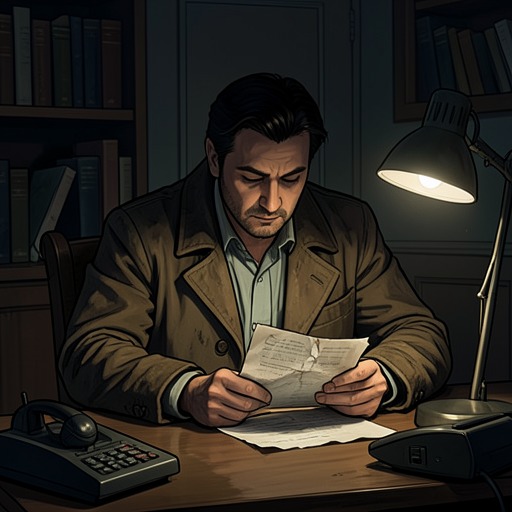
A separate clue had been found about a month earlier. Christian Habersaat had taken over Bjarke’s old room for his investigation materials and discovered, in a box of old PC games, a printed sheet of shortcuts to the Star Trek game. Pencil notes marked the printout; at the bottom, in very small capitals, appeared the title, TO FRANK. When Carl Mørck turns the paper over, the poem is identified as Bjarke’s writing about his fascination with Frank Brennan. The paper copy and the computer file thus lead to the same work through two different remnants of Bjarke’s association with the game.
When Rose reads the poem aloud, its awkwardness does not obscure its emotional direction. The meaning is described as unmistakable: rejected love, immense anger, and resentment directed at Frank Brennan. In the poem’s account, Frank had brought Bjarke’s world crashing down and ruined his family through his decisions; the anger extends even to Frank’s existence. These are not merely expressions of admiration. The poem records fascination turned into grievance, giving the investigators a personal dimension that the earlier physical clues could not supply.
From Hidden Writing to Motive
The poem matters because Christian Habersaat’s investigation had been moving in another direction. He had suspected the man associated with the VW Kombi, while also finding reasons to doubt that Bjarke was responsible. A splint at the crime scene and other discoveries had given him hope that his son was innocent. He could not see why Bjarke would kill a girl he did not know, and he understood that Bjarke was not interested in women; that subject had been a source of argument between Bjarke and June Habersaat. In that context, the poem overturns the apparent absence of motive rather than simply adding another detail to an already settled case.
Christian’s later explanation connects the poem to a concealed love triangle. He writes that Bjarke was in love with the same man as his wife, June, and that Bjarke killed Alberte Goldschmid after being pushed aside to make way for the younger girl. He believes Bjarke wrote the poem sometime afterward, probably shortly before moving out. The poem therefore supplies the emotional evidence through which Christian reinterprets both his son’s feelings and the killing. His account is a retrospective explanation, not a statement that the poem itself narrates the crime: the writing exposes the attachment and anger, while Christian draws the connection to Alberte’s death.
A Father’s Recognition
Christian’s discovery changes the investigation and his understanding of his family. He had continued to pursue the man in the VW Kombi, but the poem makes him recognize that Bjarke had a substantial motive after all. In his letter to the investigators, Christian apologizes for insisting on blaming an innocent man when his own son had committed the crime. He says he cannot bring himself to pursue Bjarke and leaves his son’s fate in the investigators’ hands. The poem is thus not a confession by Bjarke; its force comes from being an intimate fragment that the father reads as evidence against him.
Its two forms reinforce that role. The digital file is nearly lost among image files, spam, and old game executables; the paper version is tucked among PC-game materials, its identifying words written in tiny capitals. Neither presents the motive plainly until someone looks closely and connects it to the people around it. Once read, however, the title’s direct address and the poem’s anger make private fixation legible to others. To Frank becomes the hinge between Bjarke’s concealed attachment, Christian Habersaat’s belated recognition, and the reopened question of who killed Alberte.